Product Innovation
From a validated idea to a shipped product: product strategy and discovery to know what's worth building before a sprint starts, MVP development that puts a real build in front of real users before the budget commits further, UX/UI and design systems that hold up past the fifth designer, and the web, application, and API engineering it scales on.
5 capabilities, one accountable team
Jump straight to the capability you need, or read the full pillar below.
- Product Strategy & DiscoveryKnow what's worth building before a single sprint starts.
- Product & MVP DevelopmentA real product in front of real users, before the budget commits to a full build.
- UX/UI & Design SystemsAn interface that stays coherent after the fifth designer touches it.
- Web & Application DevelopmentFast, accessible, maintainable software - and a team that can keep working on it.
- API & Platform EngineeringThe backend layer a product can actually grow on.
Product Strategy & Discovery
Know what's worth building before a single sprint starts.
Opportunity sizing, user research, and roadmap framing before a build commitment - so the MVP that follows is aimed at a validated problem, not the first idea that sounded good in a leadership meeting.
- Opportunity sizing against real market and usage data
- User research and problem validation before any code is written
- Roadmap framing with explicit go/no-go decision points
- Competitive and build-vs-buy analysis where it changes the plan
How we engage
- Interview stakeholders and users to find the real problem, not the stated one
- Size the opportunity and stress-test the assumptions underneath it
- Hand over a roadmap with a defined first build scope
Product & MVP Development
A real product in front of real users, before the budget commits to a full build.
Not every idea deserves a full build before anyone knows whether it works. Our MVP development services take a promising concept to a working, user-tested product in weeks - narrow enough to ship, real enough to learn from, and built on foundations you can scale rather than a throwaway demo you have to rewrite.
- Fixed-length build sprints with a defined scope, not open-ended discovery
- Built on a production-grade stack, so a successful MVP scales instead of restarting
- Real user testing and instrumentation from the first release
- Clear go / no-go criteria agreed before the sprint starts
How we engage
- Scope the smallest version that can genuinely validate the idea
- Build and ship it to real users inside a fixed timebox
- Decide to scale, iterate, or shelve - with evidence either way

UX/UI & Design Systems
An interface that stays coherent after the fifth designer touches it.
User research, interface design, and the design system that keeps a growing product's UI from fragmenting as more people ship features to it - tokens, components, and documentation treated as a real deliverable, not an afterthought.
- User research and usability testing built into the design process
- A component library and design tokens as the single source of truth
- Accessibility (WCAG 2.2 AA) built into every component from the start
- Design-to-code handoff that stays in sync as the system evolves
How we engage
- Audit the existing interface and where it has already fragmented
- Build the design system alongside the highest-impact screens first
- Hand over documentation and a governance process for new components

Web & Application Development
Fast, accessible, maintainable software - and a team that can keep working on it.
Our web application development services cover the full stack: React and Next.js front ends, the APIs and data layer behind them, and the design system that stops the interface drifting apart as the team grows. We build for Core Web Vitals and WCAG from the start, because retrofitting either one costs several times what doing it correctly did.
- React / Next.js applications with server rendering and measured Core Web Vitals
- Design systems and component libraries that keep a growing UI coherent
- API, integration, and data-layer engineering behind the interface
- WCAG 2.2 AA accessibility built in from the first component, not audited in later
How we engage
- Review the existing codebase, performance budget, and accessibility baseline
- Build in reviewable increments, shipping behind flags rather than in one drop
- Hand over with documentation, tests, and a team trained on the codebase
API & Platform Engineering
The backend layer a product can actually grow on.
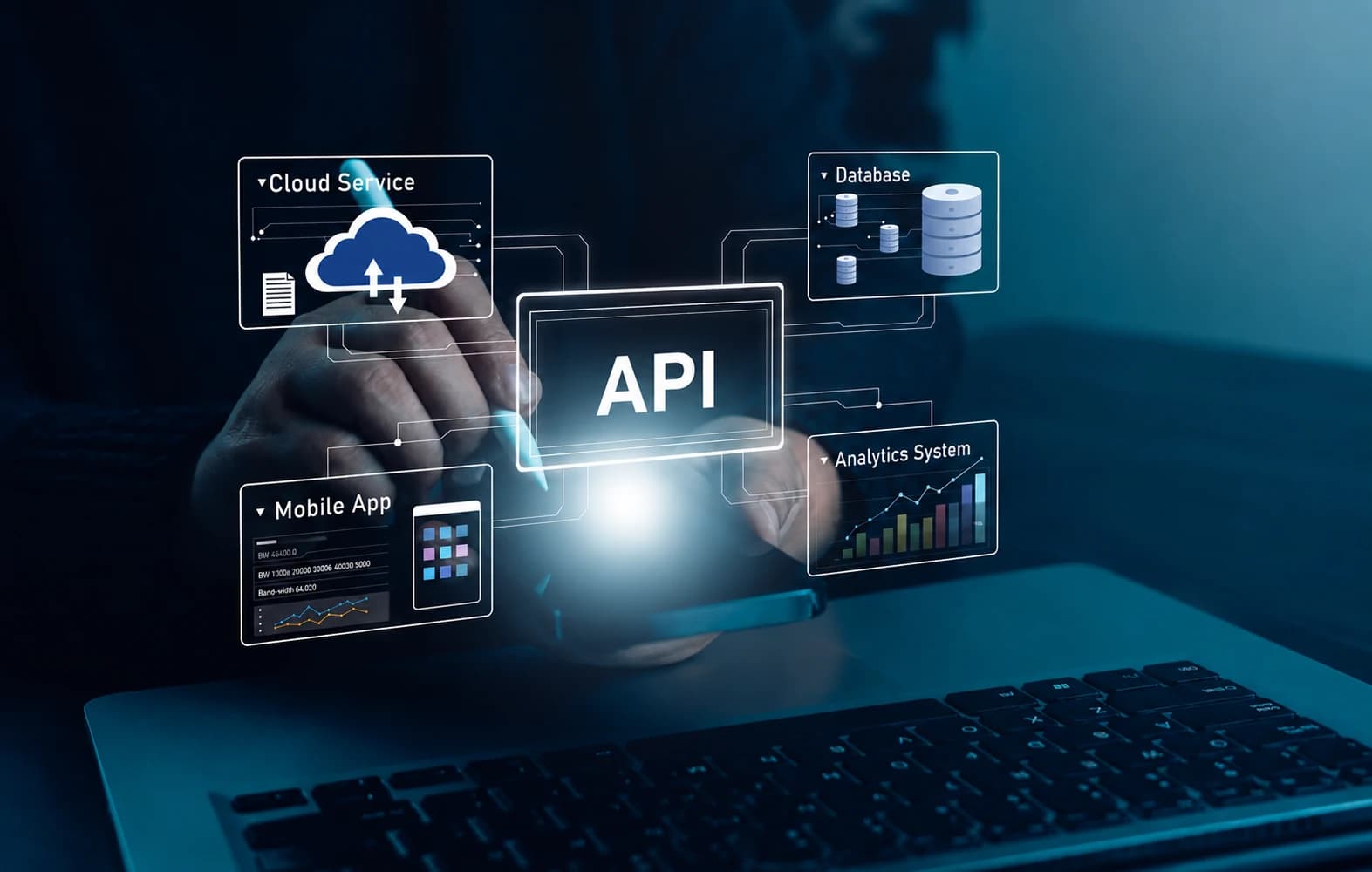
API design, service architecture, and the platform layer underneath a product - built for the load and integration surface it will actually need in year two, not just what gets a demo through launch day.
- API design and versioning built for external and internal consumers
- Service architecture sized to real load, not a hypothetical scale
- Authentication, rate limiting, and API governance from day one
- Documentation and SDKs that keep integration partners self-serve
How we engage
- Map the integration surface the platform actually needs to support
- Build the API and service layer with load testing baked in
- Hand over documentation and an API governance process
The platforms behind this pillar
Engagements in this pillar are delivered on named platforms we build and run, not a fresh stack every time.
The other 5 pillars
Most engagements draw on more than one - they're built as a single stack, not six separate practices.
AI & Data Intelligence
Data science, machine learning, and the platform underneath it - from a raw feed to a model a business decision actually depends on.
10 capabilitiesGIS & Spatial Intelligence
One live operating picture, GeoAI on top of it, and the field tooling to act on what it shows.
6 capabilitiesImmersive Technologies
Simulation, field overlays, and shared spatial sessions for work that's expensive to get wrong.
6 capabilitiesFractional Leadership
Named executives, embedded and accountable, matched to the leadership gap that's actually costing you.
4 capabilitiesEmerging Technologies
The platform, infrastructure, and frontier technology layer underneath everything else we build.
4 capabilitiesProduct Innovation - the questions that come up first
Can't find what you're looking for? Ask us
How long does an MVP take?
Most commonly six to twelve weeks from scoping to a product in front of real users, run as fixed-length sprints. We agree go / no-go criteria before starting, so the decision to scale, iterate, or stop is made against evidence rather than sunk cost.
Ready to talk through your next move?
Book a 30-minute strategy session with a ECLACTRA™ lead - no sales deck, just a straight conversation about where AI, geospatial, engineering, or fractional leadership could actually move the needle.